
Flat roofs are commonly used for industrial buildings due to their energy efficiency, ability to hold heavy HVAC equipment and ease of maintenance. But flat roofs don’t shed water as easily as sloped roofs, and this makes them susceptible to water accumulation that will result in leaks or structural damage to the building when left unaddressed. Without an effective drainage system, you face an increased risk of water intrusion which can damage equipment and inventory, negatively impact your productivity, and result in costly repairs to your roof and your building’s structure.
The Importance of Flat Roof Drainage Systems
Poor drainage on your industrial building’s flat roof can cause a variety of serious problems, including:
- Ponding water which can result in leaks and damage your roof’s structure
- Accumulation of leaves and other debris on the roof
- Degradation of caulking and other seals which protect your roof
- Accumulation of ice during the winter which can add to the load on your roof, increasing the risk of damage and, in some instances, cause it to collapse
- Development of cracks or gaps in the roof membrane due to regular freeze-thaw cycles during the winter
Installing an effective drainage system can eliminate these issues and provide your building and its contents with important protections. When you eliminate the roofing problems associated with poor drainage, you’ll minimize disruptions to your business and reduce the risk of costly repairs that can significantly impact your profitability.
Best Flat Roof Drainage Systems for Your Industrial Building
You have several options when choosing a flat roof drainage solution for your building. Each of these comes with certain benefits and limitations, and the right solution for you will depend on how you value these tradeoffs.
Interior Drains
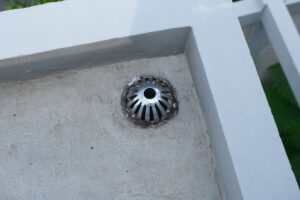 Interior drains are installed at the low points of your roof where water naturally accumulates. These drains route water through pipes inside the building which pull the water safely away from your building. Interior drains are an ideal option for large industrial buildings which prefer to have all the drainage components hidden inside the building’s structure, keeping the exterior walls uncluttered.
There are two different types of interior drainage systems:
- Gravity Drainage System – Water flows into the interior drain and is funneled down to the ground through pipes. This system works best with smaller industrial roofs that have a slight slope.
- Siphonic Drainage System – Siphonic drains use negative pressure inside the pipes to pull water rapidly through the system. This option works best with larger industrial roofs without a slight slope, where the sheer volume of water that accumulates on the roof’s surface can potentially overwhelm a gravity system.
Benefits of interior drains include:
- Interior location of the pipes provides natural insulation which prevents freezing in the winter
- Protects the building’s walls and foundation from water damage
- Provides a cleaner aesthetic appearance since the pipes are hidden within the walls of the building
However, interior drains are more costly to install and maintain than other options. In addition, they require an experienced roofing professional to inspect them, and they’re susceptible to clogs from leaves and other debris.
Gutters
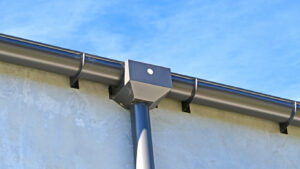 Gutters are mounted along the perimeter of the roof and collect water as it runs off the roof’s surface. Then, the water is funneled away from the building through downspouts. While gutters are more common on residential homes, they can be an effective option on small industrial buildings where the roof has a slight slope that allows the water to travel into the gutter rather than pooling on the flat surface.
Benefits of gutters include:
- More affordable than other flat roof drainage solutions
- Protects the building’s walls, windows and foundation
However, gutters can easily get clogged by leaves and other debris, which can prevent them from working properly. Regular cleaning of gutters is necessary to keep them clear. In addition, they’re not suitable for truly flat roofs where water won’t get directed naturally into the gutter, or for large industrial flat roofs where the volume of water can overwhelm the gutters.
Scuppers
Scuppers are large openings in the parapet walls of your roof. The water collected in scuppers then gets directed to a protective metal chute or downspout to carry it away from the building. For scuppers to be effective, they must be strategically placed in locations where standing water accumulates so that this water has an immediate outlet that prevents ponding.
Benefits of scuppers include:
- Low-maintenance drainage solution that won’t clog as easily as gutters or interior drains
- Can add some architectural style to the building when paired with decorative spouts which control water flow
However, the installation process for scuppers is more complex and expensive than gutters. In addition, the pipes coming from the scupper can be prone to freezing during winter, which can pose a problem for industrial buildings in Colorado. While this option can work well on small industrial buildings, they’re not ideally suited for large flat roofs where the volume of water can become overwhelming for the system.
Choosing the Right Flat Roof Drainage System for Your Industrial Building
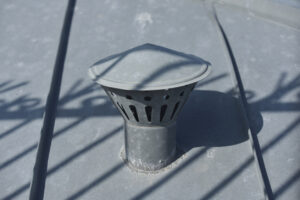 For most industrial buildings, the strongest approach is a primary interior drain system backed by scuppers or overflow drains as secondary protection. This combination ensures that if your primary system becomes overwhelmed or clogged, water has a secondary outlet that prevents ponding and the damage that follows.
Roof size is one of the most important factors in determining which system will perform best. Smaller industrial buildings with a slight roof slope have the most flexibility. Gutters, scuppers or interior gravity drains can all be viable options depending on your priorities and budget. As roof size increases, gutters and scuppers become less practical because the volume of water they need to handle can overwhelm the system.
For warehouses, distribution centers, manufacturing plants and other facilities with very large footprints, siphonic drainage systems are typically the top-performing choice. The negative pressure these systems generate allows them to move large volumes of water rapidly through fewer and smaller pipes than a gravity system requires, making them well-suited to roofs where water accumulation happens quickly across a wide surface area.
Colorado’s climate is another factor worth weighing carefully. The significant winter precipitation and freeze-thaw cycles along the Front Range create additional risks for exterior drainage components. Scupper downspouts and gutter systems are more vulnerable to freezing than interior drain pipes, which benefit from the natural insulation of the building’s structure. For industrial buildings in Colorado, prioritizing interior drainage reduces your exposure to winter-related drainage failures.
If you’re unsure which system is right for your building, our team can assess your roof and recommend the solution that best fits your building’s specific conditions.
HRS Commercial Roofing Can Help
If you’re considering upgrading your drainage system at your industrial building, HRS Commercial Roofing can help you select the most effective solution for your building. We provide comprehensive roofing services for industrial facilities, and our team has over 50 years of experience working on industrial roofs. This extensive knowledge and expertise allows us to provide the customized recommendations you need to maximize the performance and lifespan of your roof.
HRS is a subsidiary of Haselden Construction, a family-owned Colorado business with over 50 years of experience providing commercial roofing services in the Denver area. Haselden is the only general contractor of its size with a dedicated commercial roofing team, and our affiliation with them allows us to keep all work in-house for a more streamlined process, faster turnaround times and the most competitive pricing available. All our work is completed according to Haselden’s extremely high quality standards, giving you the confidence that the job will be performed right.
As your dedicated roofing partner, HRS is able to assist with all your roofing projects throughout your roof’s lifecycle. This allows us to better understand the specific needs of your business so that you receive the right solutions at all times.
Contact us today to find out more about the best drainage solutions for your building. HRS Commercial Roofing serves industrial facilities in Denver and throughout the Rocky Mountain region.
Frequently Asked Questions About Flat Roof Drainage for Industrial Buildings
What is the best drainage system for a flat roof on an industrial building?
For most industrial buildings, the strongest setup is a primary interior drain system with scuppers or overflow drains as secondary protection. This combination ensures water has an outlet even if the primary system becomes clogged or overwhelmed. For very large facilities like warehouses, distribution centers and manufacturing plants, siphonic drainage is typically the top-performing choice due to its ability to move high volumes of water rapidly through a smaller pipe network.
What causes poor drainage on a flat industrial roof?
Poor drainage is most commonly caused by insufficient or improperly placed drains, clogged gutters or interior drains, and roofs that lack adequate slope to direct water toward drainage outlets. In colder climates, frozen downspouts and scupper pipes can also disable drainage systems during winter, leading to water accumulation and ice buildup that adds significant load to the roof structure.
What are the risks of standing water on a flat roof?
Standing water accelerates deterioration of the roof membrane and seals, increasing the likelihood of leaks. Over time it can compromise the structural integrity of the roof itself. In winter, accumulated water that freezes adds significant weight to the roof structure, which in extreme cases can cause collapse. Water intrusion resulting from poor drainage can also damage equipment and inventory inside the building and disrupt operations.
What is a siphonic drainage system and when should it be used?
A siphonic drainage system uses negative pressure inside the pipes to pull water rapidly off the roof rather than relying on gravity alone. This allows the system to handle much higher volumes of water through fewer and smaller pipes than a conventional gravity system. Siphonic drainage is best suited for large industrial roofs, particularly those without sufficient slope for a gravity system to perform effectively.
How often should flat roof drains be inspected and cleaned?
Flat roof drains should be inspected at least twice a year, typically in the spring and fall, and after major storms. Regular cleaning is particularly important for interior drains and gutters, which are more susceptible to clogging from leaves and debris than scuppers. In Colorado, pre-winter inspections are especially important to ensure drainage components are clear before freeze-thaw cycles begin.
Are gutters effective for flat roofs on industrial buildings?
Gutters can be effective on smaller industrial buildings where the roof has enough slope to direct water toward the perimeter. They are not well-suited for truly flat roofs where water pools rather than flows, or for large industrial facilities where the volume of runoff can exceed the capacity of a standard gutter system.
