
Key Takeaways:
Warehouse roof damage can have wide-ranging consequences, including inventory loss, equipment damage, mold growth, structural deterioration and operational downtime. Common warning signs include water stains, ponding water, damaged flashing, membrane splits, sagging roof areas and musty odors. Left unaddressed, roof damage can result in structural deterioration of the roof deck, rafters, trusses and wall framing, requiring costly repairs. Warehouse owners can reduce the risk of roof damage by choosing durable roofing systems such as single-ply membranes, modified bitumen or standing-seam metal, scheduling inspections twice a year and after major storms, and performing routine maintenance. Most commercial property insurance policies cover damage from hail, wind, storms and fire, but typically exclude damage resulting from deferred maintenance or gradual leaks. When filing an insurance claim, warehouse owners should contact their provider promptly, schedule a professional inspection, document all damage thoroughly and file the claim as quickly as possible to expedite the process.
The roof on your warehouse plays an important role in protecting both your building and your business operations. Most warehouses use flat or low-slope roofing systems and when damage occurs, it can spread quickly. If it’s not addressed promptly, roof damage can compromise inventory, expose equipment to damage, create safety hazards for employees and disrupt your operations.
Damage to Equipment and Inventory
Roof damage can result in leaks which can allow water to enter your warehouse during storms. The water damage from a roof leak can affect inventory, potentially rendering it unusable. In addition, water intrusion can damage equipment such as conveyor systems, forklifts and other machinery. If large portions of your inventory are destroyed or equipment requires extensive repairs, it can significantly impact your bottom line.
Reduced Productivity
 A leak from roof damage can disrupt your operations, forcing loading, packing and other important tasks to be stopped while your team moves products and equipment out of the affected area. If structural damage to the warehouse floor or safety hazards from water damage force you into a temporary shutdown, it will result in even greater losses in productivity.
Health and Safety Hazards
Water damage from a roof leak can create a variety of health and safety hazards at your warehouse. Electrical hazards, slipping hazards from wet floors and ceiling damage can cause safety issues. Mold can begin to grow at your warehouse within 24-48 hours of water damage, creating health risks for your employees.
Structural Damage
When left unaddressed, roof damage can result in structural damage to your building. Drainage problems that cause water to accumulate on your roof can weaken the roofing system, causing it to sag or collapse. Leaks can result in deterioration of the roof deck or damage to the rafters, trusses or ceiling joists. In addition, water damage from leaks can damage insulation, drywall and wall framing. These issues can require costly repairs.
Financial Impact of Roof Damage
The financial impact of roof damage can be widespread. You may incur costs associated with:
- Structural repairs to your roof and your warehouse
- Equipment repairs
- Lost or damaged inventory
- Mold remediation
- Delayed shipments
- Downtime due to temporary closures
- Compensatory damages to customers if contractual services can’t be fulfilled
Understanding the Signs of Roof Damage
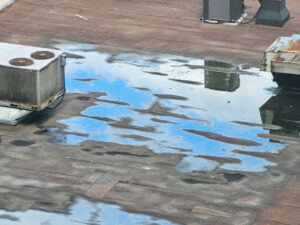 Knowing how to spot the signs of roof damage at your warehouse will ensure you take the necessary actions promptly before a serious issue develops at your facility. Common signs to watch for include:
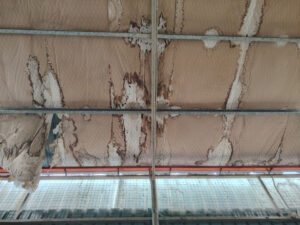
- Water stains on ceilings, walls or around light fixtures (these stains are often indicative of a roof leak)
- Standing or ponding water on your roof that remains after rain
- Damaged flashing, open seams, bubbles, wrinkles or membrane splits on the roof surface
- Dents, dimples or missing pieces of the roofing membrane after hail
- Sagging, uneven or drooping roof areas
- Musty odors, mold or damp insulation inside the building
If you notice any of these signs, it should be considered a maintenance priority. Schedule a professional commercial roof inspection at once to determine the extent of the damage.
Preventing Roof Damage at Your Warehouse
There are several steps you can take to minimize the risk of roof damage at your warehouse:
- Choose a Durable Roofing System – Your choice of roofing system will play a critical role in reducing the risk of damage. Systems using single-ply membranes, modified bitumen or standing-seam metal are excellent options for a warehouse due to their ability to resist ponding water, UV radiation and thermal cycling.
- Get Regular Roof Inspections – Scheduling roof inspections twice a year, as well as after a major storm, will help ensure you identify any signs of damage in their earliest stages.
- Perform Routine Roof Maintenance – Routine roof maintenance services will help keep gutters and drains clean and prevent debris from damaging your roof.
- Protect Against Harsh Weather Conditions – Remove snow from your roof after large storms to prevent the risk of sagging or collapse. Use impact-resistant roofing systems to guard against hail damage.
- Apply Sealants as Needed – Roof sealants will help reduce leaks, slow UV degradation and improve the weather resistance of your roof.
- Create a Response Plan – Develop an emergency response protocol so that warehouse roof leaks and other issues are addressed promptly.
- Partner with a Commercial Roofing Company – Having a dedicated commercial roofing partner who performs all regular inspections, maintenance and repairs will help you maximize the service life of your warehouse roof.
Insurance Considerations After Warehouse Roof Damage
 In many instances, you may be able to file an insurance claim after your warehouse suffers roof damage. Understanding how to navigate the insurance claims process and knowing what your policy covers can play an important role in ensuring you receive the benefits to which you’re entitled.
Know Your Policy
You should always review your insurance policy after suffering roof damage to determine what is covered. In particular, look for terms related to exclusions, deductibles and roof-specific limitations, as these will significantly impact your claim.
Most policies will cover damage from hail, wind, storms and fires. However, damage from wear and tear, deferred maintenance or gradual leaks which were never repaired may not be covered. In addition, some policies may limit coverage based on the roof’s age or condition. If you’re unsure whether your roof damage will be covered, reach out to your insurance provider.
Depending on the specifics of your policy, there may be differences in the way damage to your roof and damage to inventory, equipment or other warehouse contents are handled. Your insurance company should be able to explain to you how the claims process works for these different aspects of the damage you’ve experienced.
Navigating the Claims Process
Filing an insurance claim after roof damage can feel overwhelming, but the process becomes much more manageable if you understand the specific steps that need to be taken:
- Contact Your Insurance Provider – Contact your insurance company shortly after discovering the damage. Your insurance company can help you with next steps, including identifying a reputable commercial roofing company in your area to contact.
- Schedule a Roof Inspection – Getting a professional roof inspection will ensure all damage to your roof is accurately identified and the proposed repair plan will completely address the issues you’re experiencing.
- Document All Damage – Take photos, videos and notes of all damage to your roof as well as any equipment, inventory and other items that were impacted. Store all receipts for repairs in a safe location so that you can document all your expenses when it’s time to file a claim.
- File Your Claim – File your claim promptly to expedite the process. Your insurance company will send an adjuster to your warehouse to assess the damage and determine whether roof repairs will be sufficient or a full roof replacement will be necessary.
HRS Commercial Roofing Can Help
If you’ve suffered roof damage at your warehouse, HRS Commercial Roofing can help. We provide comprehensive roofing services for warehouses, and our team is equipped to address any damage you’ve experienced. We offer 24/7 emergency response services, and our expert technicians will arrive at your warehouse shortly after receiving your call to begin work. This prompt response time is critical to minimizing damage and limiting the disruption to your warehouse operations.
HRS is a subsidiary of Haselden Construction, a third-generation, family-owned Colorado business with over 50 years performing commercial roofing services in the Denver area. Haselden is the only general contractor of its size in the area with a dedicated roofing team, and this affiliation allows us to keep all work in-house for a more streamlined process, shorter turnaround times and highly competitive pricing. You’ll also benefit from having all work completed according to the extremely high standards Haselden has become known for over the last five decades. At HRS, we’re committed to getting the job right and we always stand by our work.
Our team will also assist you with the insurance claims process to ensure it goes as smoothly as possible and you receive the full benefits to which you’re entitled. You’ll enjoy a hassle-free process from start to finish, allowing you to focus on ensuring your operations continue running smoothly while repairs are being made.
Contact us today to schedule a roof assessment. HRS Commercial Roofing serves warehouses and industrial facilities in Denver and throughout the Rocky Mountain region.
